The ofrenda needs their photos.
This year, the family has them.
You are building the ofrenda this year: the tiers, the cempasúchil, the veladoras, the pan de muerto, the glass of water, and at the center, the photos of the people who are coming back to visit. Some of those photos are with your mother in Michoacán, some with a cousin in Chicago, some in a frame nobody wants to take out of the house. One code lets the whole family, on both sides of the border, send what they have before November first, and gather the photos from the altar, the gathering, and the panteón in one place afterward.
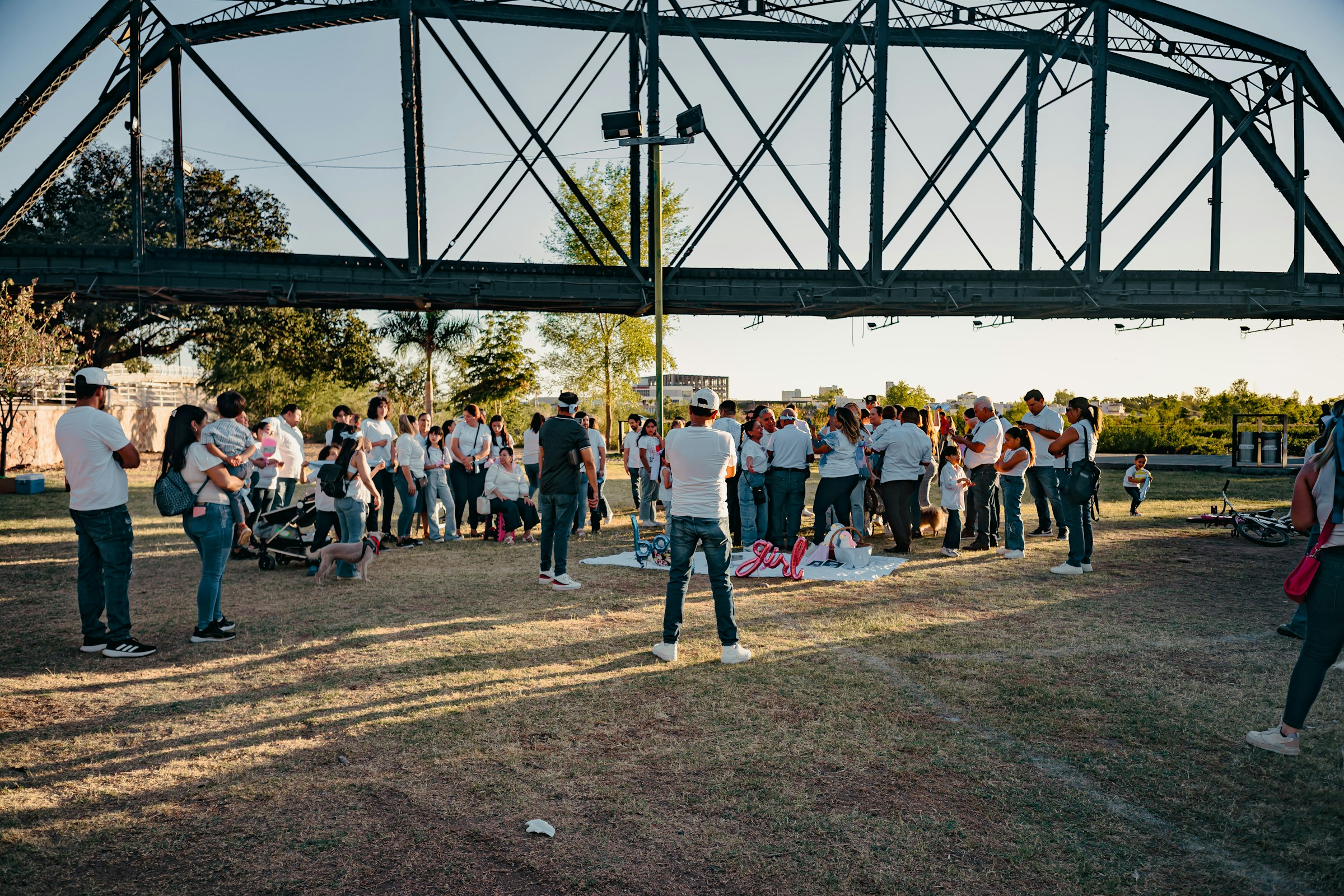
The moments guests actually photograph at Día de los Muertos gatherings
Why Día de los Muertos gatherings work better on Picsui
Written for the person hosting this one, and checked against what the product actually does.
A guest page in Spanish for the family in Mexico
The upload page follows the guest's phone settings, so a tía in Oaxaca sees Spanish and a nephew in Texas sees English, with no setting to find. The same code works in both countries, and the photos of the departed that live in one house reach the ofrenda in another.
The photos that go on the altar, gathered first
The ofrenda is built around photographs, and families rarely have all of them in one place. Share the code in October and ask each household for the photo of their abuelo, their tío, the baby. Photograph the framed print flat in daylight and upload it; the family in the other city can print it for their own altar.
A question of your own beside the photos
Replace the default guestbook prompt with something that fits the night: what they liked to eat, what they always said, the story you tell about them every year. Written messages are kept next to the photos in the same gallery, in whatever language the person writes them.
No app. No account. One scan.
Guests point their camera at a QR code and are uploading in seconds. Nobody installs anything, nobody creates a login, and the grandparents can do it as easily as the teenagers.
unlimited photo and video uploads
Every guest can send as much as they like — phone photos, iPhone HEICs, short videos — with a fair-use bound of 25 GB per event. Originals are kept at full resolution.
Guest pages in 3 languages
The upload page speaks English, Español, Français, chosen from the guest's phone settings, so a mixed-language crowd is never guessing what a button does.
A guestbook with your own question
Replace the generic prompt with one that fits the day. Written messages are collected alongside the photos and kept with the gallery.
Broadcast it to the people who couldn't come
Live Pass is a standalone $39 one-time add-on: stream up to 90 minutes to 100 viewers on a private link, with audio. Family abroad watch on any phone, no app required.
Full-resolution downloads
Download any photo, or the whole event as one archive, at original quality. What guests uploaded is what you keep — no compression, no watermark on paid events.
How it works
Set up in a minute. Collect for the whole event.
Create the event in October and send the code to every household in the family chat, in Mexico and in the US.
Ask each family for the photos of the departed that they have, so the ofrenda can be built with all of them.
On November first and second, guests upload the ofrenda, the gathering, and the visit to the panteón as they happen.
Download the full gallery afterward and keep the archive with the family's photos for next year's altar.
Try uploading as a guest.
Scan this with your phone the way a guest at your event would. Choose a sample photo and upload it from your browser, then open the demo gallery to see it land.
- Scan the code with your phone camera — it opens straight in the browser.
- Upload a sample photo. Look for the upload confirmation so you know it reached the host.
Use a sample you are comfortable sharing with Picsui. Please keep personal or sensitive photos out of the demo.
M2FDV8LW
This is the same kind of code your guests scan at your event.
Getting the most from Día de los Muertos gatherings
Start in early October, not on the day. The ofrenda goes up in the last days of the month, and the photos that belong on it are the ones the family has to find first. Send the code to the family group with one clear request in both languages: a photo of each person the ofrenda is for. A phone photo of a framed print, taken flat in daylight without flash, is good enough to print at letter size for the altar. The family in one country can then print what the family in the other one sent, and both ofrendas hold the same people. Ask the eldest relative for names and dates as written messages while the photos come in; those are the details that get lost between generations.
On the night, put the code on a small card beside the ofrenda, not on it. People photograph the altar from every angle in candlelight, and those photos upload well; ask them to turn the flash off so the veladoras and the cempasúchil keep their color. If the family goes to the panteón to clean and decorate the graves, and in some places stays late into the night, the photos from there are usually the most moving of the year and the least likely to be shared. A reminder in the group the next morning, with the link, brings them in. Photos of the departed on the altar can be sensitive for some relatives, so keep host review on and approve before the gallery is shared beyond the family.
If part of the family is in Mexico and part in the United States, consider Live Pass for the moment the ofrenda is finished and the candles are lit, or for the blessing if your family says one. It streams on a private link for up to 90 minutes, with audio, to anyone you send the link to, on any phone. Agree a time that works across time zones and send the link an hour before. Afterward, download the whole gallery as one archive and keep it with the family's photographs. The gallery is hosted for 365 days, so the archive is what carries the year's photos forward to the next ofrenda.
Common questions about Día de los Muertos gatherings
Can the family in Mexico use it without an app or an account?
Yes. A guest scans the code or opens the link, and the upload page opens in the browser on any phone, with nothing to install and no login. The page appears in Spanish or English depending on the phone's own language setting, so nobody has to change anything. The same code works in both countries. WhatsApp is the usual way to pass the link around a family, and the link works from there directly. Voice and written messages are recorded from the same page, in whichever language the person speaks.
How do we collect the photos of the departed for the ofrenda?
Share the code in early October with one request: a photo of each person the ofrenda honors. Most families have these as framed prints in different houses, and a phone photo of the print, taken flat in daylight, uploads well and prints cleanly for the altar. Relatives upload from wherever they are, the photos land in the gallery, and anyone with the link can download them at full resolution and print them locally. Add the person's name and dates as a written message beside the photo, so the gallery becomes a record as well as a source.
Can we keep the gallery from year to year?
The gallery is hosted for 365 days on an Event Pass, which carries it to the next Día de los Muertos. Before the hosting period ends, download the entire gallery as one archive at original quality; that archive is the family's, permanently, and can be added to a new event the following year. Many families treat the archive as part of the ofrenda itself: the photos of the departed, the altars from each house, and the messages, kept together and brought out again each November. An ended event can also be reopened within its hosting period, and the code stays the same.
Who can see the photos?
Only the people you share the link or code with. The gallery is private by default, never listed anywhere, and guest pages are blocked from search engines and AI crawlers. If you turn on host review, every upload waits for your approval before the rest of the family sees it, which matters when some relatives feel differently about photographing the altar or the graves. You can remove anything, and close the gallery to new uploads when the season is over.
What does it cost?
An Event Pass is $29, paid once for one event, with no subscription and no charge per guest or per household. It includes unlimited uploads from any number of relatives within a 25 GB fair-use bound, guest pages in English, Español, Français, a written guestbook, host review, full-resolution downloads and 365 days of hosting. Live Pass, for streaming the lit ofrenda or the gathering to family in the other country, is a $39 one-time add-on or included in the Picsui Complete at $49.
Every photo from Día de los Muertos gatherings, in one place
One-time Event Pass, $29. No subscription, no per-guest fee.
Get startedWant to see it first? Compare the passes
Also planning one of these?
Explore other use cases
One QR code, every kind of event. See how Picsui fits yours.