Then and now.
Finally in one place.
This page is for the reunion committee, the three people who found everyone's addresses and booked the room. A 10-year reunion is a bar; a 50-year reunion is a sit-down dinner with a memory table for the classmates who are gone. What both have in common is a then-and-now wall, name tags with senior photos, a lot of hugging, and the classmates who wrote to say they wished they could come. One QR code makes the night the class archive, and the broadcast puts the absent ones in the room.
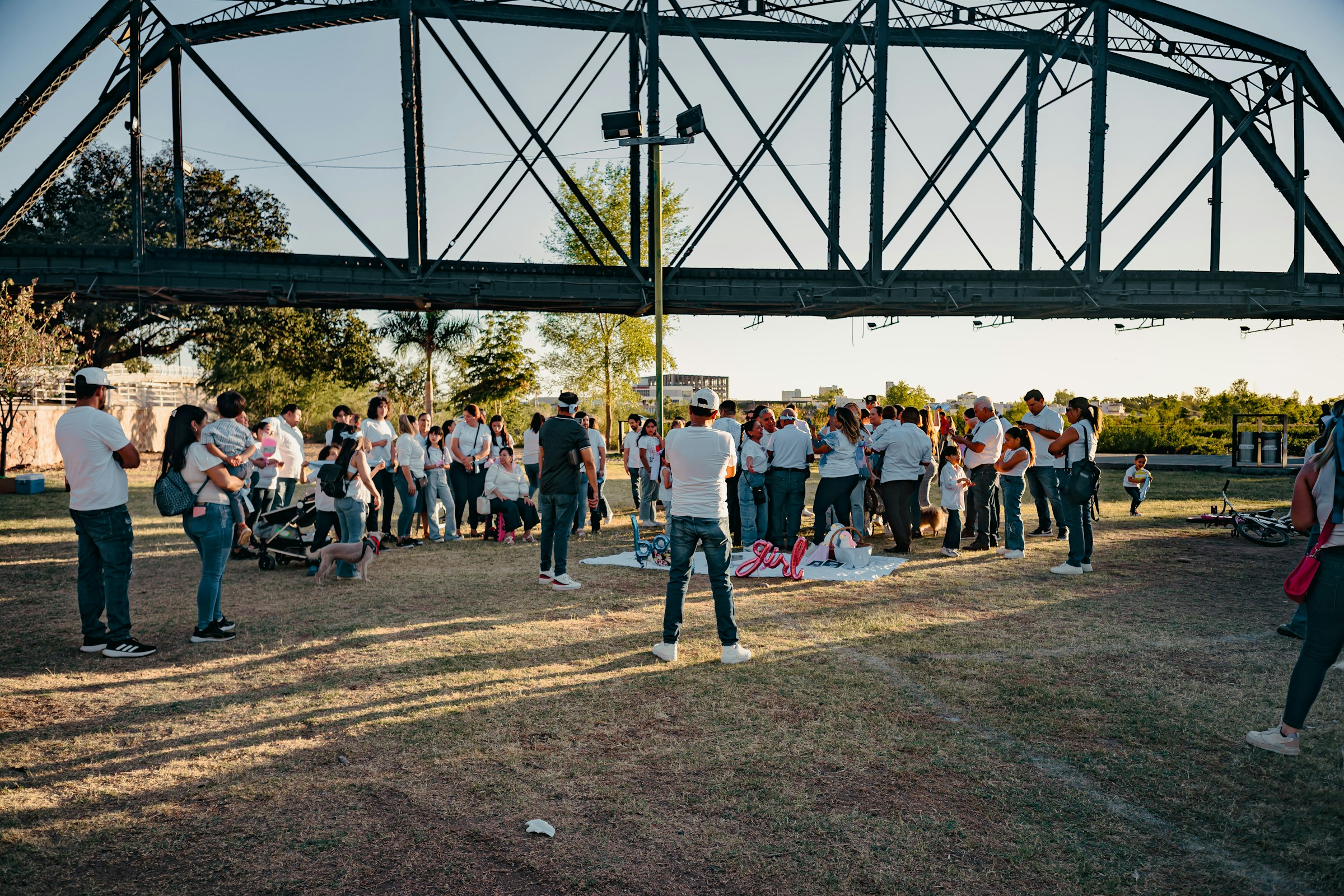
The moments guests actually photograph at class reunions
Why class reunions work better on Picsui
Written for the person hosting this one, and checked against what the product actually does.
Where are you now, in their own voice
The best part of a reunion is the story that starts with what happened to you after graduation, and it is never written down. Ask it as the guestbook question and classmates answer in writing or as a voice message up to 60 seconds, so the class hears it from the ones who never made it to the microphone.
The classmates who wrote to say they could not come
Every reunion gets a dozen emails from people across the country or in a care home. Live Pass streams the class speech, the memory table reading and the group photo for up to 90 minutes on a private link, with audio, so they are in the room for the part that matters most.
The guest list the committee already built
The committee has spent six months finding people. Import that list, send each classmate a personal invite link with the RSVP and a place to upload their then photo ahead of time, and check people in at the door from a phone instead of a printed list that is out of date by the first drink.
No app. No account. One scan.
Guests point their camera at a QR code and are uploading in seconds. Nobody installs anything, nobody creates a login, and the grandparents can do it as easily as the teenagers.
Guest list and RSVPs in the same place
Import your list, send each guest a personal invite link, collect replies and party sizes, and check people in at the door from your phone.
Broadcast it to the people who couldn't come
Live Pass is a standalone $39 one-time add-on: stream up to 90 minutes to 100 viewers on a private link, with audio. Family abroad watch on any phone, no app required.
Voice messages
Guests record up to 60 seconds of audio right from the upload page — a blessing, a toast, a story — saved next to the photos in the same gallery.
Private by default, never indexed
The gallery is only reachable by the link or code you share. Guest pages are blocked from search engines and named AI crawlers, and you can close the gallery whenever you choose.
Full-resolution downloads
Download any photo, or the whole event as one archive, at original quality. What guests uploaded is what you keep — no compression, no watermark on paid events.
How it works
Set up in a minute. Collect for the whole event.
Create the reunion as the committee, with the class year in the name. Import the classmate list and send personal invite links with the RSVP so the headcount and the gallery share one place.
Ask classmates to upload their then photos and old snapshots before the night. Print the QR code on the name tags and the then-and-now wall.
Classmates upload through the night and record where-are-you-now messages. Start the broadcast for the class speech and the memory table so the absent classmates see it.
Download the archive for the class, keep the link as the shared album, and send it to everyone on the list, including the ones who could not come.
Try uploading as a guest.
Scan this with your phone the way a guest at your event would. Choose a sample photo and upload it from your browser, then open the demo gallery to see it land.
- Scan the code with your phone camera — it opens straight in the browser.
- Upload a sample photo. Look for the upload confirmation so you know it reached the host.
Use a sample you are comfortable sharing with Picsui. Please keep personal or sensitive photos out of the demo.
M2FDV8LW
This is the same kind of code your guests scan at your event.
Getting the most from class reunions
Open the gallery weeks before the reunion, not on the night. The then-and-now wall is built from photos classmates already have in shoeboxes, so send the upload link with the invitation and ask for two things: one photo from senior year and one from now. Print the results for the wall and the gallery has the whole class before anyone has arrived. Committee members who are chasing RSVPs can point to the wall as the reason to reply. By the night, the classmates who could not attend have already been in the gallery for a month, which is what makes them feel part of it.
The memory table deserves its own moment and its own recording. At a 40- or 50-year reunion, the list of classmates who have died is read aloud, and the room goes quiet. Film that from one phone and upload it, or stream it so the families of those classmates, who are often invited, can watch from home. Then leave the guestbook question open for the night: "Tell us one story about someone at the memory table." Those answers, written or recorded as voice messages, are the part of the archive that the next reunion committee will be most grateful for.
Make the committee the host and keep it that way. Reunions come around every five or ten years and the gallery, on an Event Pass, is online for 365 days, so download the full archive before it ends and hand it to whoever is likely to run the next one. Name the class historian, or the alumni office, as the recipient and the finished gallery is emailed to them on a date you choose. The archive is the class's best chance of having a record when the 60-year committee starts looking for photos of the 50th and finds that nobody kept them.
Common questions about class reunions
Can classmates who could not travel take part?
Yes, in two ways. Before and after the night, they upload their own then-and-now photos and record a where-are-you-now voice message from wherever they are; the link works the same in another state or another country. On the night, Live Pass, a $39 one-time add-on, streams up to 90 minutes with audio on a private link to as many as 100 viewers, so they watch the class speech and the group photo in a browser with no app. Ask the emcee to read a few of their messages aloud so the room knows they are there.
How do we collect the then photos for the wall?
Send the upload link with the invitation, six or eight weeks out, with a clear ask: one photo of you from senior year and one from now. Classmates scan or photograph the old print with their phone and upload it as they would any photo, and the committee downloads the set at full resolution to print the wall. Those uploads also mean the gallery is already the class's shared album before the night begins, which helps the RSVPs, because people want to see who else is in it.
Who can see the reunion photos?
Only people with the link or code. The gallery is private by default, never listed publicly, and guest pages are blocked from search engines and named AI crawlers, which matters to classmates who have a job title now and would rather their reunion photos not be searchable. Share the link with the class list and no further. If the committee wants to review photos before they are visible, host review holds each upload until approved. A classmate can ask for a photo to be taken down at any time.
Can we use the same gallery for the whole reunion weekend?
Yes. A reunion that runs a Friday bar night, a Saturday dinner and a Sunday school tour is one event with a sub-event for each, so one code covers the weekend and the photos stay sorted by day. The guest list and RSVPs are shared across all of it, and check-in at the door works on each night. When it is over, the committee downloads the whole weekend as one archive, or any single day, at full resolution, and sends the same link to the whole class.
How much does it cost the committee?
An Event Pass is $29 one time for the reunion, however large the class. It includes the guest list with personal invite links and RSVPs, door check-in, unlimited uploads with a 25 GB fair-use bound, voice messages, full-resolution downloads and 365 days of hosting. Live Pass for the classmates far away is a separate $39 one-time add-on. There is no subscription, so the committee pays once and is done, and the next committee buys its own pass in ten years.
Every photo from class reunions, in one place
One-time Event Pass, $29. No subscription, no per-guest fee.
Get startedWant to see it first? Compare the passes
Also planning one of these?
Explore other use cases
One QR code, every kind of event. See how Picsui fits yours.